
Commencing Retirement
Make a Confident Transition from Work into Retirement
At Massey Financial Advice, we guide individuals and couples in Brisbane through the financial side of life after work. Our role is to help you feel confident and in control, knowing your finances are structured to support your goals for the years ahead.
Make a Confident Transition from Work into Retirement
The period immediately before and after you stop working can involve some of the most important financial decisions you will make. This is reported as one of the 10 most stressful life events.
Your regular salary may be ending, but your living expenses will continue. Superannuation, investments, cash savings and possible government entitlements may now need to work together to provide the income that employment previously supplied.
At Massey Financial Advice, we help Brisbane individuals and couples prepare for this transition and put their retirement arrangements into action with confidence.
Through personalised advice and financial modelling, we can help you understand:
- when you may be financially ready to retire;
- how your income could be structured after work;
- when and how you may be able to access your superannuation;
- how much cash to keep available;
- whether your investments remain appropriate;
- how long your assets may support your lifestyle;
- how and when the Age Pension may fit into your plan;
- what needs to be organised before your final day at work.
These aren’t simple questions and the answers are different for everyone. That’s where expert, personalised advice from a The aim is to help you begin retirement with a clear structure rather than a collection of disconnected accounts and unanswered questions.

Are You Ready to Stop Working?
Choosing a retirement date involves more than reaching a particular age.
Before leaving work, you may want to understand whether your assets can support your preferred lifestyle and what may happen under different circumstances.
You may be asking:
- Can I afford to retire now?
- Would working for another year or two improve my position?
- Should I retire fully or reduce my hours first?
- Is there a particular time of year that’s best to retire?
- How will I replace my salary?
- Should I pay off my mortgage before retiring?
- Will my money last throughout retirement?
Financial modelling can help test your proposed retirement date and compare it with alternatives.
For example, you may want to compare:
- retiring this year or in two years;
- stopping work completely or moving to part-time hours;
- paying off debt or retaining more cash;
- drawing different levels of retirement income.
The purpose is not to predict the future perfectly. It is to help you understand the likely effect of your options before making a major decision.
For broader advice about building your long-term retirement strategy, visit our Retirement Planning Brisbane page.
What Changes When You Commence Retirement?
Leaving work changes more than your weekly routine. It also changes how your financial life operates.
While you are working, your finances are generally supported by regular employment income. Once that stops, you may need to rely on a combination of:
- an account-based pension;
- cash savings;
- investment income;
- rental income;
- part-time or consulting work;
- the Age Pension or other government benefits.
A commencing-retirement strategy should bring these elements together so you understand where your income may come from, how much may be available and how your investments can support withdrawals over time.

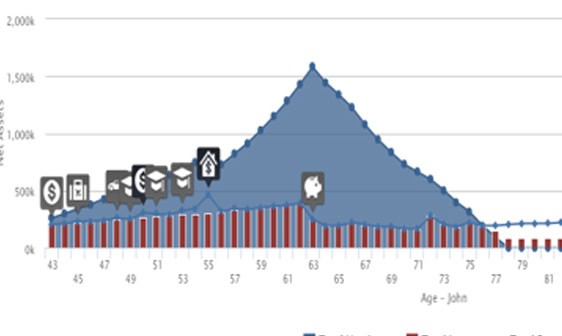
- Overseas holidays every 3 years
- Replacement car every 5 years
- Private high school fees for 3 children from John’s age 49
- Purchasing a boat at age 50
- Home renovations at age 55
- Reduce their expenditure by changing or postponing some goals
- Become more disciplined with their spending (now and in the future)
- Modify their savings levels
- Adjust their investment risk
What to Organise Before Your Final Day at Work
1. Confirm Your Retirement Date
Your preferred retirement date should be tested against your financial position rather than selected in isolation.
We can help you consider:
- your superannuation and investment balances;
- outstanding debt;
- expected retirement spending;
- future contributions if you continue working;
- your eligibility to access superannuation;
- possible Age Pension eligibility;
- large planned expenses;
- the effect of retiring earlier or later.
Sometimes the modelling confirms that the proposed date is achievable. In other cases, working slightly longer, reducing hours gradually, adjusting spending or making additional contributions may improve the sustainability of the plan.
2. Understand Your Superannuation Options
Reaching retirement does not automatically mean every superannuation option is available in the same way.
Access generally depends on factors such as your age, employment status and whether you have met an applicable condition of release.
Before making changes, it is important to consider:
- whether you can access your super;
- whether you intend to withdraw a lump sum or establish an income stream;
- whether some money should remain in accumulation;
- the tax and investment implications;
- how your choice may affect future flexibility;
- whether beneficiary arrangements remain appropriate.
We can help you review your options and incorporate them into your broader retirement strategy.
3. Establish Your Retirement Income
One of the biggest changes at retirement is moving from regular employment income to income funded by your accumulated assets.
Your retirement income may come from:
- superannuation pensions;
- cash and term deposits;
- shares and managed investments;
- investment property;
- business or trust income;
- part-time employment;
- government entitlements.
The right structure will depend on your assets, spending, tax position, goals and tolerance for risk.
We can help you consider how much income you may need, which assets should fund it, how much cash to retain and how withdrawals may affect future balances.
4. Consider an Account-Based Pension
An account-based pension may allow eligible retirees to receive regular income from their superannuation savings in a tax-effective manner.
Before establishing one, you may need to consider:
- how much super to transfer;
- how much income to draw;
- how the account will be invested;
- whether money should remain in accumulation;
- minimum withdrawal requirements;
- your need for lump-sum access;
- beneficiary arrangements;
- the effect on government entitlements.
An account-based pension should be coordinated with your cash reserves, investments and wider retirement income strategy.
5. Create a Cash Reserve
Retirement income should not depend entirely on selling investments whenever an expense arises.
Holding an appropriate cash reserve may help cover:
- regular living costs;
- home repairs;
- vehicle replacement;
- medical and dental expenses;
- travel;
- family emergencies;
- periods of investment-market weakness.
Too little cash may force you to sell investments at an inconvenient time. Too much cash may reduce long-term growth and purchasing power.
The aim is to find a balance that supports both short-term security and long-term sustainability.
6. Review Your Investments
Your investment strategy may need to change when you move from building wealth to drawing an income.
However, retirement does not necessarily mean removing all investment risk. Retirement may last for decades, so part of your portfolio may still need to grow and help manage the effect of inflation.
We can help you review:
- your mix of growth and defensive assets;
- diversification;
- expected income needs;
- cash and short-term reserves;
- your comfort with market movements;
- which assets may be used for withdrawals.
7. Plan Your Early Retirement Spending
Retirement spending is unlikely to remain exactly the same every year.
Many people expect to spend more during the early years on:
- travel;
- hobbies;
- dining and entertainment;
- renovations;
- vehicles;
- helping children or grandchildren.
Your plan should distinguish between regular expenses, discretionary spending, large one-off purchases and future health or care costs.
This provides a more realistic picture than relying on one annual figure indefinitely.
8. Consider the Age Pension
The Age Pension may provide part of your income when you retire or become available later as your circumstances change.
Eligibility can depend on factors including:
- age;
- residency;
- income;
- assets;
- relationship status;
- home ownership.
We can help you consider how possible entitlements may fit into your retirement projections and income strategy.
9. Decide What to Do With Debt
Some people commence retirement debt-free. Others may still have a mortgage, investment loan or other commitments.
Before using superannuation or investments to clear debt, it is important to consider:
- the interest cost;
- the effect on your retirement capital;
- ongoing repayments;
- access to emergency funds;
- possible tax consequences;
- your preference for certainty.
Repaying debt may reduce retirement expenses, but using a large amount of capital can also reduce future income and flexibility.
10. Review Your Estate and Beneficiary Arrangements
Commencing retirement is also a good time to review whether your financial and estate arrangements still reflect your wishes.
This may include:
- your Will;
- enduring powers of attorney;
- superannuation beneficiary nominations;
- pension reversionary arrangements;
- jointly owned assets;
- trusts or business interests.
Legal documents should be reviewed by an appropriately qualified legal professional. We can work alongside your solicitor and accountant to help coordinate the financial parts of your retirement strategy.
How Financial Modelling Can Help You Decide When to Retire
Consider a Brisbane couple aged 63 and 61 who would like to retire within the next year.
They own their home, have superannuation, cash savings and a small investment portfolio. They also plan to travel and expect to replace a vehicle during the early years of retirement.
They may want to know:
- whether they can both retire at the same time;
- how much annual income they could draw;
- whether they should repay the remaining mortgage;
- how much cash to keep available;
- how their superannuation should be structured;
- whether one partner continuing to work would improve the plan;
- when they may qualify for the Age Pension;
- what may happen if investments perform below expectations.
We can model different retirement dates, spending levels and financial structures to help them understand the likely effect of each decision.
Financial modelling is based on assumptions and cannot guarantee future outcomes, but it can provide a clearer basis for planning.

Our Commencing Retirement Process
1. Clarify your retirement timing and lifestyle
We discuss when you intend to stop working and the lifestyle you would like your finances to support.
2. Review your financial position
We examine your superannuation, savings, investments, property, debt, spending and potential government entitlements.
3. Model your retirement income
We estimate how your income and assets may develop under your proposed retirement plan.
4. Compare different options
Where relevant, we compare retirement dates, income levels, debt strategies and investment approaches.
5. Develop and implement your strategy
We prepare personalised advice and help put the agreed arrangements in place.
6. Review the plan after retirement
Your spending, investments and priorities may change after you leave work, so regular reviews can help keep the strategy aligned with your needs.
The First Years of Retirement
Retirement planning does not end on your final day of work.
The first few years provide an opportunity to review whether:
- your income is meeting your needs;
- your spending is in line with expectations;
- your cash reserve remains appropriate;
- your investments remain suitable;
- your withdrawal strategy is sustainable;
- your Age Pension position has changed.
If you have already been retired for some time, advice may still help you assess whether your current arrangements remain appropriate.










About Adam Massey
Adam Massey, founder of Massey Financial Advice, is a Certified Financial Planner® with a Bachelor of Business and a Diploma of Financial Planning. He is married to Bron, they have 3 children and Adam has lived in Sydney, Adelaide, Canberra, Port Douglas, London and now Brisbane. He was an active committee member of The Mater Foundation and volunteers at the school tuckshop. In other words, he has more than textbook knowledge – he has the formal training and life experience to help you get the financial outcomes you want – to build wealth for retirement without sacrificing your current lifestyle.
Graduate
Australian Institute of Company Directors


Why Work with Massey Financial Advice?
Adam Massey is a Certified Financial Planner® with a Bachelor of Business and a Diploma of Financial Planning.
Brisbane has been Adam’s home for more than 20 years. Through Massey Financial Advice, he helps individuals and couples make practical decisions about retirement income, superannuation, investments and their broader financial future.
Our approach is based on:
- personalised advice;
- practical financial modelling;
- clear explanations without unnecessary jargon;
- consideration of your complete financial position;
- coordination with your accountant and solicitor where appropriate;
- ongoing support as retirement progresses.
What Others Are Saying…
Here is a small sample of what other people say about their experience dealing with Adam.
Commencing Retirement FAQs
When should I seek advice before retiring?
It can be helpful to seek advice before selecting your final retirement date or making major changes to your superannuation. This allows time to model your options and organise your income arrangements before your salary stops.
Should I withdraw all my super when I retire?
Not necessarily. Depending on your circumstances, you may consider leaving money in super, establishing an account-based pension, making a partial withdrawal or combining different approaches.
How much should I draw from my super each year?
The amount should reflect your living expenses, other income, planned purchases and the need to make your assets last. It should be considered within a broader retirement projection.
Will I qualify for the Age Pension?
Eligibility depends on the rules applying at the time and factors including your age, residency, income, assets and relationship status.
Can I keep working after I start retirement?
Yes. Some people continue working part-time, casually or in a consulting capacity. Ongoing earnings may affect your superannuation strategy, tax position and government entitlements.
What if markets fall after I retire?
A market decline early in retirement can be challenging if you are withdrawing money while asset values are lower. Cash reserves, diversification and a planned withdrawal strategy may help manage this risk.
Do I still need advice after retiring?
Your income, spending, investments and entitlements may change over time. Ongoing reviews can help keep your retirement arrangements aligned with your needs.
Start Your Retirement with Greater Clarity
Are you approaching your final day at work and unsure how to put your retirement finances into place?
Would you like to understand how much income your assets may provide and whether your proposed retirement date is realistic?
Book a complimentary initial call with Massey Financial Advice to discuss your position and find out whether commencing-retirement advice may be suitable for you.